Be yourself; Everyone else is already taken.
— Oscar Wilde.
This is the first post on my new blog. I’m just getting this new blog going, so stay tuned for more. Subscribe below to get notified when I post new updates.
David Carbines: The Hit Collector
A personal adventure of collecting and cataloguing the UK hit singles and albums. With some original art, music and literature reviews exclusively on this site as I am not on social media.
Be yourself; Everyone else is already taken.
— Oscar Wilde.
This is the first post on my new blog. I’m just getting this new blog going, so stay tuned for more. Subscribe below to get notified when I post new updates.
America, with Billboard, started recording music charts before we did in the UK. There has been somewhat of an American chart since 1940, when the Best Sellers In Stores chart was established. Billboard also collated Most Played by Jockeys (essentially an airplay chart) and Most Played in Jukeboxes which is self-explanatory. NME published it’s first chart for the week of 14th November 1952. The closest to the US sales chart, this was considered the measure of what was popular on the UK. An all encompassing chart, even though it didn’t consider airplay or jukeboxes. America had a single publisher of charts. The UK were soon to have many, as rival publications jumped on the bandwagon to gain popularity by publishing a chart of the most wanted records in the country: Melody Maker, Record Mirror, and most importantly, Record Retailer. The US chart was not considered an all encompassing chart until the same week (12th November) 3 years later in 1955, when the first Top 100 was published. The predecessor of what became the Hot 100 in 1958, weighting physical sales and radio play, with the addition of digital sales and streaming weighting, is still the same today.
In contrast to the US’ Singles chart being born from a number of separate charts, the UK Singles chart, even if retrospectively from the publication of the first Guinness Hit Singles in 1977 to the current owners of the data (The Official Charts Company), there has always been the idea of a single lineage. This idea and early chart collation techniques have thrown up some odd anomalies in that time! Examples include LP albums on the singles chart, even after the creation of Album chart (Sometimes called the LP chart), also a sales-only chart. Bill Haley’s Rock N Roll Stage Show being at #30 on the singles chart (9th November 1956) while simultaneously at #2 on this albums chart, as they were compiled by different companies . Other strange phenomena included the 2 sides of a record being listed separately but charting simultaneously. Perhaps strangest of all being Michael Holliday’s The Gal With The Yaller Shoes and Hot Diggity (Columbia DB3783). The Gal With The Yaller Shoes appearing first on it’s own, then the 2 sides separately and simultaneously for 2 weeks in June 1956. Hot Diggity re-entered on it’s own in August only for them leave the chart as a double A-side listed together. Now encompassing streaming, the UK chart is still directly and exclusively measures public consumption of music (i.e. no radio play). In the pre-streaming era, this was paid-for physical sales and downloads and calculated on a straight forward, unweighted units basis. A 99p Cassette would count the same as a £2.99 CD, for example.
Although calculated by different third parties over the years, including BRMB, CIN, Gallup and Milward Brown, the charts have been published by Record Retailer (now Music Week) and considered official since 1960. The change from NME to Record Retailer hasn’t always been recorded in the same way and Guinness have changed the way this transition was calculated. The start date of the Record Retailer Top 50 chart was considered for many years to be Week Ending 10th March 1960 because that was the publication date of the issue of the chart of 5th March 1960, which corresponded with the NME chart of 4th March 1960. The 2nd edition of Guinness Top 40 Singles, stating the last NME date for calculation in the official charts being 26th February 1960 (one week earlier).
Examining this, the current OCC website and previous issues of the Guinness Hit Singles (1st, 12th,13th, 14th , 16th and 19th editions), it is clear there is now an additional NME top 30 for the week of 4th March 1960 taken into account.
Each one of those 30 has one less week counted in the 1st edition compared to all of those later editions. The separated re-entries listed in the 1st and 12th editions were particularly helpful in establishing where the errors were. The records falling into 3 main categories: Those entering the chart on or before 26th February and still on chart 10th March, those entering or re-entering on or after 10th March and new entries of 4th March. There were 4 New Entries listed in this final top 30 week: Russ Conway (Royal Event), Percy Faith (Theme From ‘A Summer Place’), John Barry Seven (Hit And Miss) and Freddie Cannon (California Here I Come). Taking one of these as an example (Hit And Miss), we can see the ambiguity of this new week. The first edition does not list it at all as shown by the entry date (10th March) and The 12th to 15th editions listing the re-entry separately, the 19th stating just a total 14 weeks coming from the 12 of the previously documented initial run, the re-entry week and newly accounted for new entry week, dated 10th, 5th and 4th of March respectively – all supposedly representing the same entry week for the single. Only the 19th edition correctly adding the extra week to the title and artist totals despite these changing dates.
Russ Conway suffered a similar fate. As both artists have had no hits since the first edition of Hit Singles, their totals can be clearly seen to be retrospectively updated across the editions. His chart entry date also changed, having only a single chart run of 7 weeks corrected to 9 weeks in the 19th edition. He had lost an extra week at the peak position of #15 as a non-mover in the earlier editions.
Marv Johnson’s You Got What It Takes was previously overcredited at #5 in the first edition. This was corrected to #7 for the troublesome 10th March week by the 12th edition. In part due to Acker Bilk’s Summer Set being to another record reaching it’s peak position (#5) that week? We can only speculate but it was one of only 3 singles to peak below #1 in the week of 4th March. The aforementioned Freddie Cannon hit is now being credited with entering at it’s new highest position. Guinness claiming #25 since the 14th edition, OCC crediting it at equal #24 (with Hit And Miss).
Nat King Cole’ Time And The River is a unique record: The only one to have a chart run before, during and after this week. All 3 runs documented in the earlier editions. The middle run increasing it’s length from 2 to 3 weeks with the inclusion of the new week, which appears to have taken place for the 16th edition: the first to remove the separate re-entries from the listing.
Thanks to the increased chart size, none of the top 30 in that last NME week dropped out of the Record Retailer top 50, though Neil Sedaka’s Oh Carol came closest, falling 29 to 50 in it’s 18th week. All Guinness editions only credit this record with 17 weeks. Being credited with just 17 in the first edition, shows that 18 is the correct amount of weeks, as currently on OCC data. The 18th edition was not updated to include this extra week.
The first edition does not credit Gene Vincent’s My Heart with it’s 2nd one-week re-entry, though Top 40 Charts and later editions do. The 8th top 50 week overall. Be My Guest by Fats Domino was correct in the first edition with a run of 8 weeks followed by a run of 4, incorrectly added a 13th week by the 19th edition. With adding weeks to records on chart over the transition period, I suspect being ‘correct’ by today’s calculations in that first edition was more accident than design, thus introducing the error to the later editions, which has since been corrected again by OCC. Bobby Rydell’s Wild One was belatedly credited with it’s 1-week #47 re-entry by the 12th edition.
Without exception, Top 40 Charts marries up perfectly “Last Week” on 10th March with the NME Chart of 26th February. It shouldn’t come as a surprise as it does state in the cover it uses 26th February as the last NME chart and first top 40 is 10th March and doesn’t use the NME 4th March chart. It was a surprise, however, is that doing these calculations showed a whole extra week is now considered part of the official chart with no mention of it’s inclusion. Most changes this new addition makes are quite minor, the main ones have already been discussed above, which have been used to determine which chart to use and if they are correct and the printed publications agree. From the type of changes made in the various editions of Guinness Hit Singles, I can only conclude that it was not done by one person at one time, and therefore, a mention of the new week was omitted as it was a gradual correction over several editions. Luckily, no records were on chart for exactly the week of 4th March only. All 30 had already been hits in other chart weeks.
The last 2 discrepancies, which haven’t impacted my analysis but are worthy of note are:
Adam Faith – What Do You Want
Johnny Mathis – Misty
Adam Faith’s record was not on the chart for the previously disused 4th March week, according to Top 40 Charts and Hit Singles 19th edition, it has a continuous 19 week run. With this extra week, it has a 15 week followed by a 4-week one. A fact already acknowledged by the first edition (1977), re-entering on 10th March. The opposite is true for Johnny Mathis. The first edition states a continuous 13 week run. The 12th edition, not updated to count the 4th March, states the split in the run with a re-entry after the initial 9-week run. Of course with the new week now being counted, the correct facts are a 10 week initial run followed by a 2 week run (total 12 weeks). Re-entry, correct dates and number of weeks are in the 19th edition only and the current OCC data.
As the only time in UK chart history where the publisher has changed, and the changes in the weeks used in the Official calculations over time established, that should be the most difficult and changeable part of the chart research complete. Particularly, as going forward, chart collation methods became more accurate, it should also mean the end of oddities like joint positions and both sides of the same record being simultaneous hits. We shall see!
Although there is a very famous specific joint position which may be mentioned in a future article. Give you a clue: it has a tenuous link to the Adam Sharp playlist.
Artist – Title – Cat No, Position (Chart weeks: Top 10/40/75)/Hit Singles represented (Position, Weeks on top 75)
7″ Singles:
Andrew Ridgeley – Shake – AJR1, #58 (0/0/3)/ Parent Album: Son Of Albert (failed to chart).
CD Singles:
Nick Heywood – He Doesn’t Love You Like I Do – 659728 2, #58 (0/0/2)/ Parent Album: From Monday To Sunday (failed to chart)
R.E.M. – Near Wild Heaven – W0055CDX, #27 (0/2/4)/ Parent Album: Out Of Time (#1, 137wks) – In Collection.
CD Albums:
Jeff Buckley – Grace – 475928 2, #31 (0/1/12)/ Singles: Last Goodbye (#54, 4 weeks), Hallelujah (#2, 22 weeks)
Lana Del Rey – Born To Die – 2787091, #1 (15/76/125)/Singles: Video Games (#9, 28 weeks), Born To Die (#9, 15 weeks), Blue Jeans (#32, 5 weeks)
Orchestral Manoeuvres In The Dark – Sugar Tax – CDV2648, #3 (6/22/29)/ Singles: Sailing On The Seven Seas (#3, 13 weeks), Pandora’s Box (#7, 10 weeks), Then You Turn Away (#50, 4 weeks), Call My Name (#50, 2 weeks)
Oui 3 – Oui Love You – MCD10833, #39 (0/2/3)/ Singles: For What It’s Worth (#28, 6 weeks / Reissue: #26, 3 weeks), Arms Of Solitude (#54, 2 weeks), Break From The Old Routine (#17, 6 weeks), Facts Of Life (#38, 2 weeks).
Take That – Wonderland – 572 673-1, #2 (6/13/15)/ Single: Giants (#13, 1 week)
Toni Braxton – More Than A Woman – 74321959362, Failed to chart. Contains hit single Hit The Freeway (#29, 3 weeks)
Andrew Ridgeley: Obviously highly successful as a member of Wham!, but this is his only chart hit as a solo act. 12″ contains extended versions. CD contains 2 different mixes not on any other formats. Neither in collection yet.
Nick Heywood’s 2nd-smallest hit single. His last 5 singles all had just 2 weeks on the chart. This is one of those 5, with only one having a lower peak position. This CD edition contains the tracks available on the other chart eligible formats (7″, Cassette) and an additional 2 acoustic versions of previous hits exclusive to this edition.
R.E.M. – The 3rd of a series of 4 CD Singles containing a live concert when combined together. It is the 2nd in the collection and they are having quite an influx into the collection. 2 Albums (Up and Reveal) and both CD Single versions of Shiny Happy People being recent additions. This single contains exclusive (in terms of chart eligible formats) live recordings. Only the 12″ contains a further track on no other formats. Total tracks in collection is now 77.
Jeff Buckley is a new artist to the collection! This is his debut hit album containing debut hit Last Goodbye, the only physical single from the album. Hallelujah was a challenger for the Christmas #1 in 2007 on digital singles only. It is his biggest hit of any kind. A deluxe reissue with an extra disc hit #44 spending 2 weeks on chart. This edition fell off the chart from it’s highest position – a re-entry of just 1 week from #31 in 2014.
Debut and biggest hit album for Lana Del Rey: 125 of a total 164 top 75 weeks, and counting of course having last been on the singles chart in May. The first physical album in the collection in her own right (previously only represented by a guest appearance on The Weeknd’s album).
Orchestral Manoeuvres In The Dark. The first CD album in the collection. Many earlier albums on vinyl yet to be digitised. Contains all their chart weeks achieved 1989-1992 inclusive. All the singles entered and dropped out during 1991 and OMD had no chart weeks at all in 1989 or 1990.
Oui3: Another new artist to the collection, and a very efficient addition! It is their only hit album containing all top 40 hit singles and all but 2 weeks in total. Joy Of Living (#55, 2 weeks) is the only hit single not on this album. In the vein of De La Soul.
Take That album contains their most recent hit single, dropping out of the top 75 with just 1 week at #13. They have had a #1 album since this hit (Odyssey). Wonderland is by some distance, their least successful studio album. As it stands, Odyssey and III (the immediate predecessor and successor to Wonderland respectively) are the 2nd least successful studio albums with 31 weeks on top 75 each, but that is likely leave III alone on this stat as Odyssey is still in the top 100. Total tracks represented in collection is now up to 126.
Toni Braxton – 60th track in the collection.
Overall a more efficient representation by purchases of bigger hits. Almost single-handedly thanks to the Lana Del Rey album, let alone the singles from it. Fewer hits but more chart weeks this week.
Totals (Last week):
Albums: 6 (5 hits) (12)
Albums chart weeks: 184 (134)
Singles: 3 (0)
Singles chart weeks: 9 (0)
Singles represented on albums: 16 (including 1 as re-issue) (11)
Singles weeks represented on albums: 126 (91)
Combined weeks represented: 316 (225)
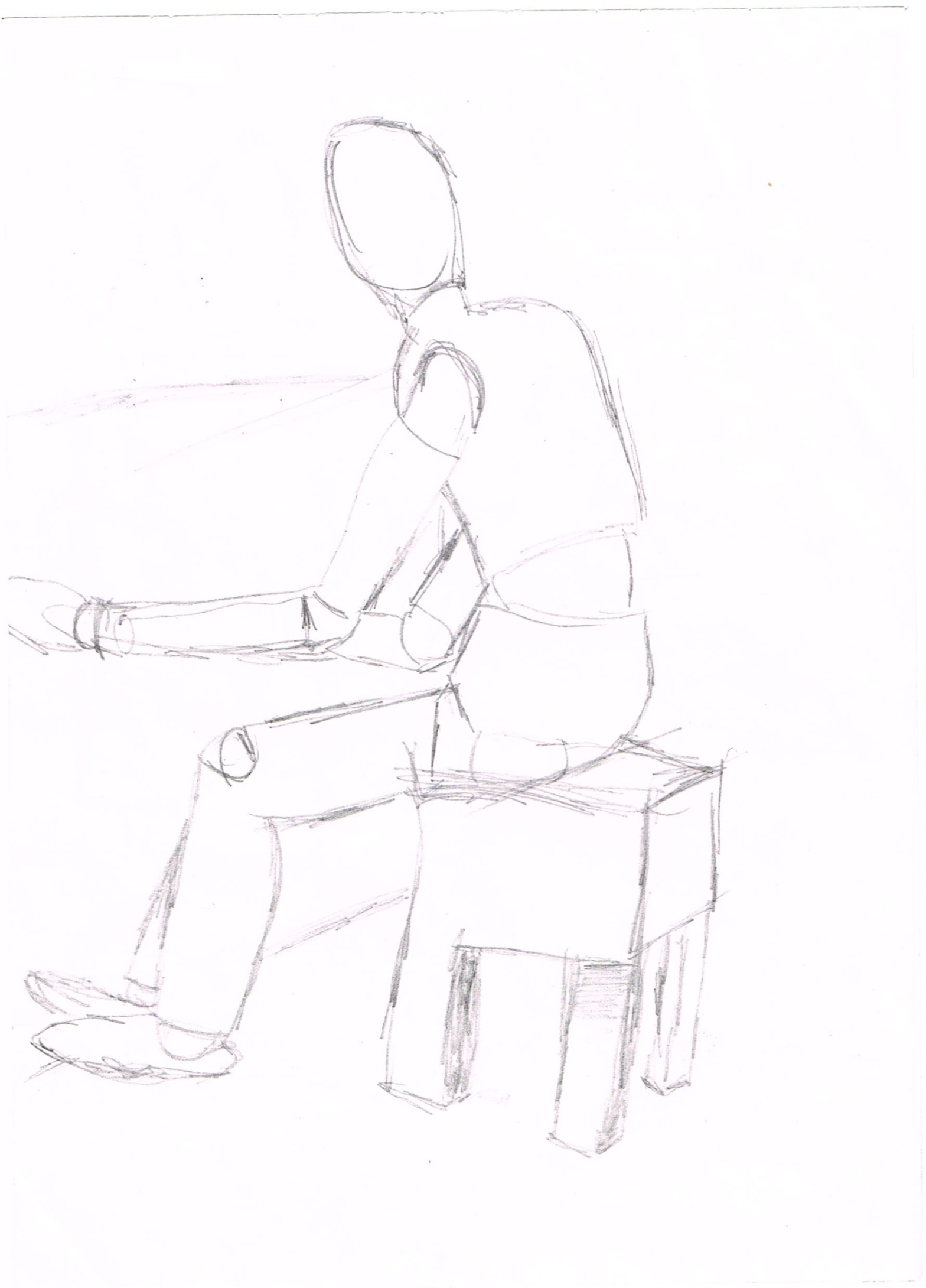
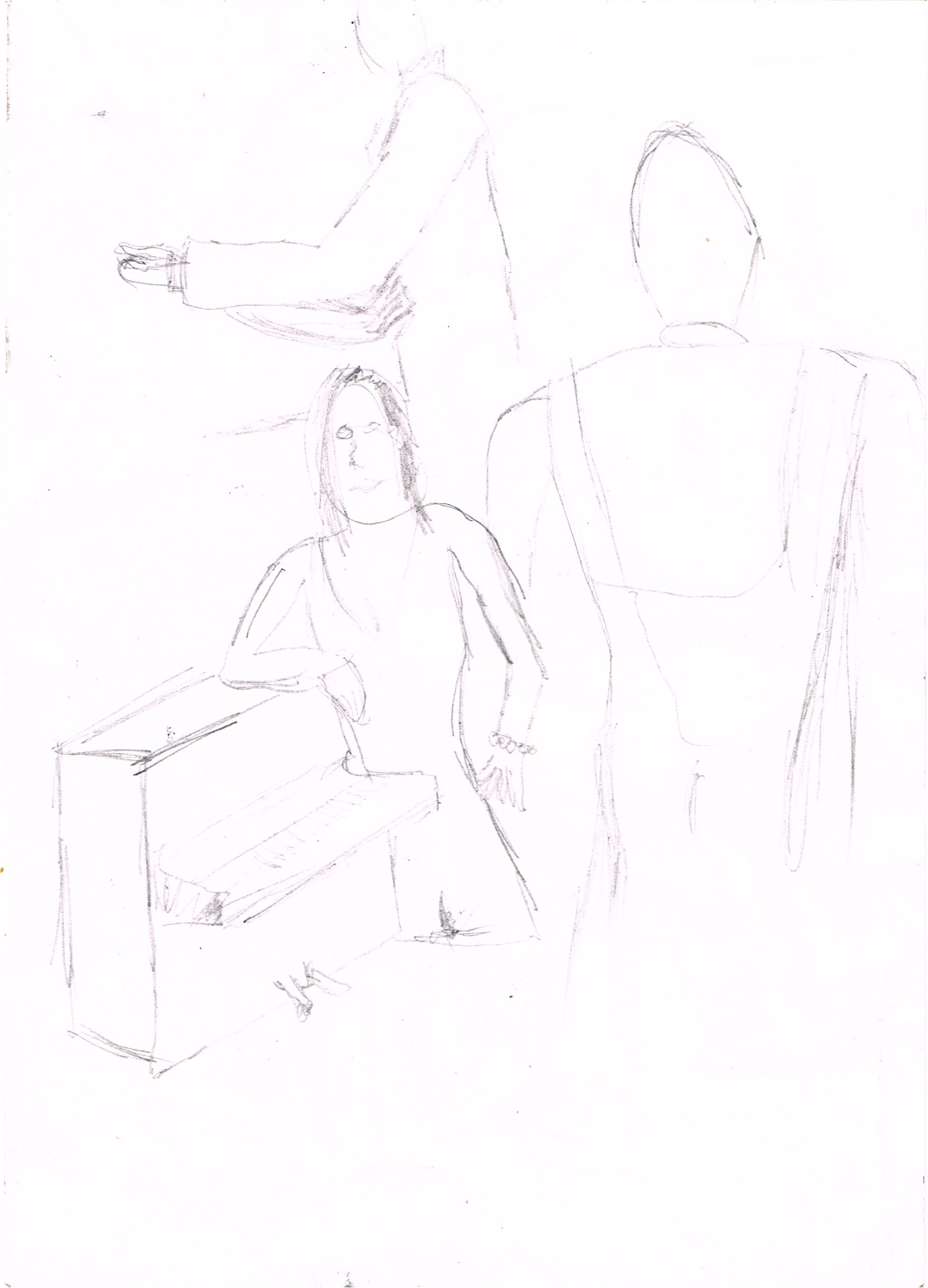
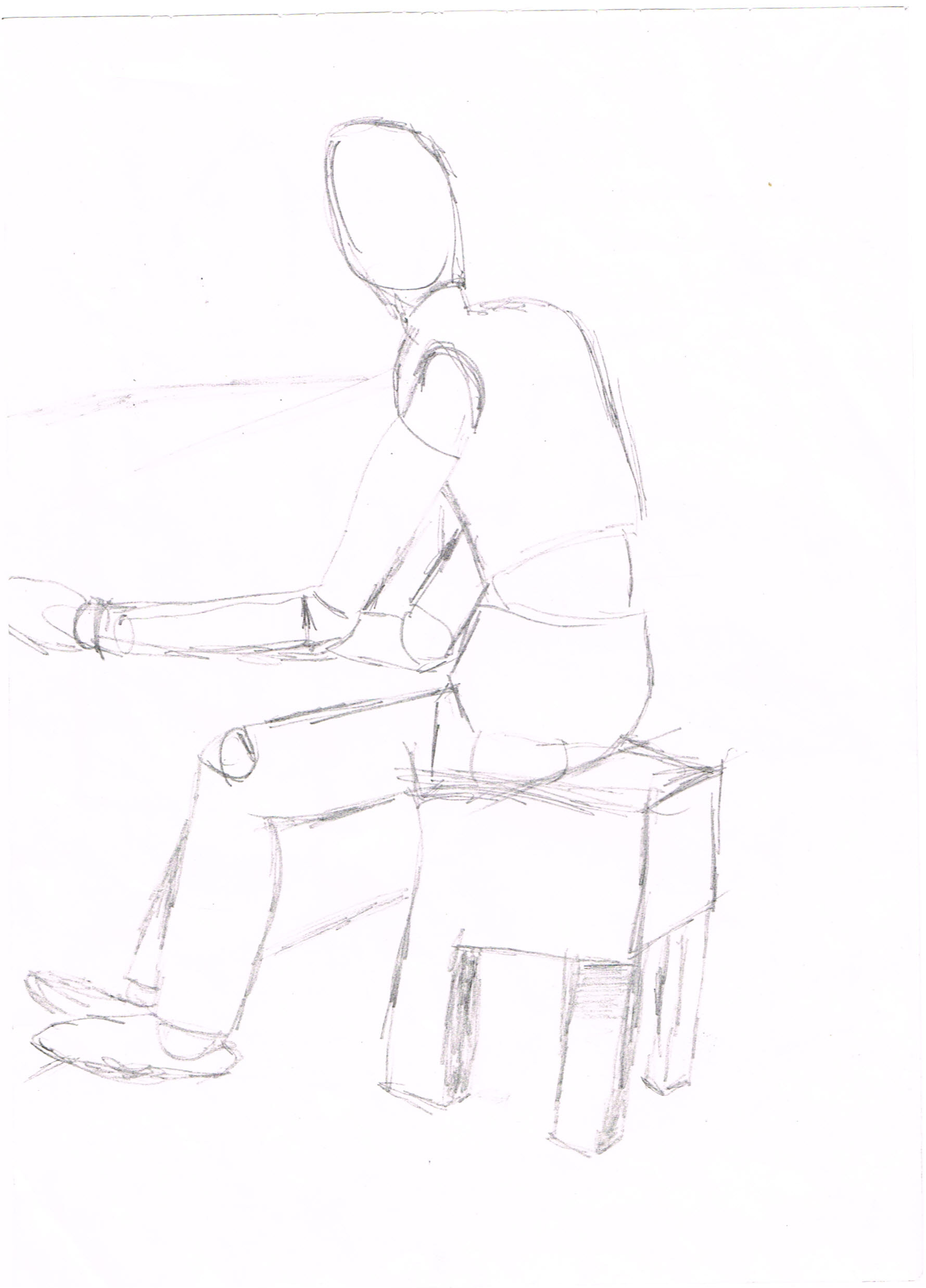
Adam meeting Angelina in the bar. The piano view from pure imagination. As this didn’t quite meet expectations, I practiced drawing form life: my mannequin in a seated piano-playing pose. My first figurative drawing since school. This will be practiced and improved.
Artist – Title – Cat No, Position (Chart weeks: Top 10/40/75)/Hit Singles represented (Position, Weeks on top 75)
CD Albums
Air – Everybody Hertz – CDV2956, #67 (0/0/1)/ No Singles
Anita Baker – Rapture – 7559604442, #13 (0/12/35/47*)/Sweet Love (#13, 12wks), Caught Up In The Rapture (#51, 5wks)
Bette Midler – Beaches Soundtrack – 7567819332, #21 (0/6/9)/Wind Beneath My Wings (#5, 13wks)
Metro Station – Metro Station – 88697278292, #35 (0/1/4)/ Shake It (#6, 18wks)
Nas – Street’s Disciple – 5177249, #45 (0/0/2)/Bridging The Gap (#18, 4wks)
Richard & Adam – The Christmas Album, #24 (0/2/4)/No Singles
Rod Stewart – Soulbook, #9 (2/8/16)/No Singles
Rufus Wainwright – Want Two – 9880444, #21 (0/2/3)/No Singles
Twista – Kamikaze – 7567932382, #19 (0/7/22) Slow Jamz (#3, 10wks), Overnight Celebrity (#16, 7wks), Sunshine (#60, 3wks; Reissued: #3, 10wks), So Sexy (#28, 3wks), Hope (#25, 6wks)
LP Albums:
Jane Fonda – Jane Fonda’s Workout Records New And Improved – CBS88640, #60 (0/0/2/4*)/ No Singles
Nana Mouskouri – British Concert – 6651003, #29 (0/11/11)/No Singles
Stage Cast Recording – Fings Ain’t Wot They Used T’Be – LK4346, #5 (4/11/11)/ No Singles
Air album is their least successful album representing just 1 week at #67 and no singles. A nice obscure addition of a small hit.
Both Anita Baker and Bette Midler’s albums are debut hits containing the debut and highest charting hit singles. Bette Midler had a lower-placed follow-up single (From A Distance, #6) that spent more weeks on chart (14) than Wind Beneath My Wings.
The Metro Station album represents 100% of their chart hits (sole album and A-side of only top 75 single). Another single from the album ‘hit’ #89. That is their entire chart career.
Richard & Adam album is their 2nd and lowest charting hit album. It is the 3rd in my collection of 4. Only missing is their most recent Believe – Songs Of Inspiration. 26 of their 30 weeks in the top 75 are represented. They have never had a hit single.
Rod Stewart is part of his albums-only success. He’s not had a top 40 single since 2001 on Atlantic. The last label to have more than one hit with him since then, of 6 that have had chart action below the top 40. It is one of a huge 65 hit albums. MANY are missing from the collection!
Debut hit album for Rufus Wainwright. It’s predecessor, Want One contains his debut hit single (I Don’t Know What It Is, #74, 1wk) but as an album failed to hit the top 75 (#88, after Want Two had hit the chart). 8 of his 14 top-75 albums weeks are now in the collection with the 4 weeks of both singles combined represented on the albums.
Twista. Debut hit album and by far the most successful of the new additions in terms of it’s contained singles: 5 Singles, 2 of which were #3, the 5 singles spending a total 39 weeks on the singles chart. 22 top-75 weeks on the album chart, this purchase represents a total 61 combined chart weeks.
Jane Fonda. Nearly didn’t buy this as it is late for an exercise record to be a hit (1984) and I didn’t think it was a hit. The big hit exercise records were mostly 1981-2. As I have the original version, this New Improved edition completes the Jane Fonda hit record collection.
Nana Mouskouri once held the record for Album With Most Weeks On Chart By A Female for over a decade. Over And Over scored it’s 97th chart week in June 1974. Tina Turner’s Private Dance was the album to overtake that record and first charted almost exactly 10 years later, in June 1984. Both are already in the collection.
Fings Ain’t What They Used T’be is only the 4th stage recording to hit the chart and did so in 1960. Consequently, all 11 weeks recorded here are in the top 20. It contains no hit singles, but 2 different versions of the title track were: by Max Bygraves and Russ Conway respectively.
Totals:
Albums: 12
Albums chart weeks: 134
Singles: 0
Singles represented on albums: 11 (including 1 as re-issue)
Singles weeks represented on albums: 91
Combined weeks represented: 225
*Total top 100 chart weeks: contains chart-counting weeks in 1980s when albums chart was a top 100.
Dates read: 13th – 20th June 2019
This is only the 2nd piece of ‘pure’ adult fiction I have ever read. The first being The Ice Twins by S. K. Tremayne, which will be reviewed here soon. Previously I have only read children’s fiction at school, factual (mostly music autobiographies) and more recently, fact-based fiction, akin to docudramas.
They say don’t judge a book by it’s cover, but without reading it, what else are you supposed to do? The title reminiscent of greatest hits albums and a broken heart record instantly appealed when perusing the shelves of the library. Reading the synopsis, there were some profile similarities between myself and title character Adam Sharp, namely the deep interest and knowledge of music and being ‘of a certain age’ with nostalgia and wonder of the past and it’s impact on the future creeping in. Adam, being from Manchester and working part time as a pianist in Australia is where the similarity ends!
Divided into 2 distinct parts, the book centres around the short but intense relationship between Adam and local (Australian) TV actress Angelina Brown. The first being the initial relationship in 1989, the second the week-long meeting in the present day for first time in 23 years, staying with her and her 2nd husband in France.
A key and unusual element of the attraction of this book was the addition of a playlist. A list of real life songs and recordings give a real extra dimension to the story and interaction with the characters. As a music fan and reader, I was at least familiar with almost all of the playlist. Adam and myself knowing them to different levels of intimacy, him to deep lyrical level to be able to perform them, myself ranging from a similar deep knowledge (e.g. Walking In Memphis – Cher) to knowledge at least of the performing artists’ sound and general feel.
One song that I thought I didn’t know, and found out I did afterall was Angel Of The Morning. I played it and realised I knew it as an interpolation used in Angel, a #1 for Shaggy, which simultaneously interpolates another song that I do know – The Joker by the Steve Miller Band (also a #1 in it’s own right). Angel Of The Morning was only a minor UK hit (#27 was the highest charting version, was also part of a medley), but became ‘our’ song for Adam and Angelina, which cements her as a very enigmatic character for him, particularly well expressed as a fantasy figure in the period between her making contact out of the blue and the first audio/visual contact via skype and in person that bring all the memories back. Thanks to the use of the playlist concept, she can have the same impact on the reader. She continued to do so for me deep into part 2 due to author’s writing.
As Adam and Angelina only ever met whilst she was married, a different husband in each of the parts, Adam’s performing and song choice is what sets the relationships apart from the marriages. That and the pet names used from the instant chemistry of the first meeting whilst Adam is performing in a bar, adds realism and depth to the relationship. Allowing the reader into something only shared between Adam and Angelina. The lyrical symbolism of the songs chosen being as meaningful as much as the other parts of relationship. Adam has become skilled at weaning more information from the song choice of requests than the punters realise such as subconscious thoughts and suppressed emotions, intensified by the soundscape of the original recordings and the musical composition. In particular Charlie, Angelina’s 2nd husband late in the 2nd part.
Simsion skillfully describes the lyrics just enough to inform the reader of the detail of the song that Adam knows deeply, or remind the reader if they already know the song so you can get just as much from the book without listening to the records simultaneously. I really appreciated the musician in-jokes too such as the character being referenced as A. Sharp (the note and chord A#), something else used as a significant unifying factor between Adam and Angelina – the first note of the first song they perform together and their shared initial. Simsion touches on how and why Adam uses certain performance techniques which musicians will particularly understand the emotional meaning, which hopefully non-musicians will also understand. They are brief descriptions, so shouldn’t turn non-musicians to boredom.
Simsion also skillfully finishes off each chapter, particularly in part 2 with a line that just leaves you hanging on to want to read the next page and start the next, where just a few lines earlier you could have happily had a break. You feel for the 3 main characters in Part 2 where Charlie’s motivation to participate in the holiday and meeting arrangements is a catalyst for the rollercoaster of emotional paradox felt by all 3 main characters, and to a lesser extent, Claire, Adam’s long term relationship between the meetings with Angelina. The dynamic changing in a line with one dramatic reveal after another. Was it Charlie’s or Angelina’s idea to meet?
I preferred Part 1 as it was full of joy and optimism and because it had ended on a high with both knowing and happy that there would a known end that they would part ways and make the most of what they had until Adam had to leave, and being young, both knew there was plenty of opportunity for each beyond that. This is still a strong element of part 2 but has a lot more added to the mix, both the interim time where they have lived a life and the present day with a less certain future than 1989, and the tumultuous events of the present. Essentially it hangs on whether Angelina chooses Adam or Charlie or whether one is chosen for her by the actions of one, the other or both men. You’ll have to read it to find out which, and I hope I’ve been informative enough without giving the main story away! Some of the most interesting parts are the exploration of what parts of the people, of their relationships, and dynamics are the same and different in the 2 eras. Particularly the change in meaning the songs have to the characters. In some cases from a representative of a great time, to fond memories, poignancy to apathy. You can change your job, location, ambitions and relationships but still have the same youthful enthusiasm with the right triggers. Or change your reaction with same triggers of the past.
This book with have you ecstatic, tearful and wistful. It has certainly been inspirational for songs and artwork with the characters experiencing such difficult and fraught situations. I loved it and will definitely read it again.
Playlist
Hey Jude (Beatles)
Like A Rolling Stone (Bob Dylan) – the Judas moment is on The Bootleg Series Vol.4 Live 1996 Royal Albert Hall.
Someone Like You (Adele)
My Sentimental Friend (Herman’s Hermit’s) – a taste of Adam’s Accent
Walk Away Renee (The Left Banke/The Four Tops, or, for a spare version such as Pete The Project Manager sings, Linda Ronstadt)
Brown Eyed Girl (Van Morrison)
Because The Night (Patti Smith Group) – Adam is wrong: Bruce Springsteen did record a studio version, eventually released on The Promise (2010).
Both Sides Now (Joni Mitchell/Judy Collins)
You’re Going To Lose That Girl (Beatles)
You Are So Beautiful (Joe Cocker)
You Can Leave Your Hat On (Joe Cocker)
I Hope That I Don’t Fall In Love With You (Tom Waits)
If You Gotta Go, Go Now (Bob Dylan / Manfred Mann) – Dylan’s acoustic version on The Bootleg Series, Vol. 6 Bob Dylan Live 1964: Concert at Philharmonic Hall is the closest to how Adam plays it
I’m Henry VIII, I Am (Herman’s Hermits) – an overdose of Adam’s accent in the same vein as ‘Mrs Brown, You’ve Got A Lovely Daughter’
Greensleeves (Loreena Mckennitt)
I Am Woman (Helen Reddy)
Early In The Morning (Mojos) – Australian all female blues combo
Walking On Sunshine (Katrina & The Waves)
Mr. Siegel (Tom Waits)
Imagine (John Lennon)
Angel Of The Morning (Merrill Rush & The Turnabouts / Juice Newton) – Growing up in NZ, I first heard Allison Durbin’s version
I Will Survive (Gloria Gaynor)
Great Balls Of Fire (Jerry Lee Lewis)
Skyline Pigeon (Elton John)
Walking In Memphis (Cher)
Walk Out In The Rain (Ann Christy)
Against The Wind (Bob Seger)
Clair (Gilbert O’Sullivan)
Goodnight Irene(Ry Cooder) – his version features an accordion
Angelina (Bob Dylan)
Lola (Kinks)
For Once In My Life (Stevie Wonder)
C Jam Blues (Oscar Peterson)
Champagne Charlie (Leon Redbone)
Summertime (Billie Holiday / Janis Joplin)
Angie (Rolling Stones)
Chopin etude Op. 10, No.3 Tristesse (Vladimir Ashkenazy)
Farther On (Jackson Browne)
The Ship Song (Nick Cave & The Bad Seeds)
Angel (Sarah McClachlan)
Non, Je Ne Regrette Rien / No Regrets (Edith Piaf)
Bird On The Wire (Leonard Cohen) – The performance on Cohen Live: Leonard Cohen in Concert, 1994
All These Things That I’ve Done (Killers)
San Diego Serenade (Tom Waits)
The Pretender (Jackson Browne)
The Times You’ve Come (Jackson Browne)
Revolution (Beatles)
textpublishing.com.au/books/the-best-of-adam-sharp for Spotify playlist www. textpublishing.com.au/books/the-best-of-adam-sharp for Spotify playlist
I guess you could say it all started in the summer of 1996. It was at that seminal point in your life when career decisions and exams are foisted upon you and little else seems to matter. Something else did matter though! Music.
Ever conscious of the future, it wasn’t clear to continue with my interest in maths, or aim for the “if you do what you enjoy, you’ll never work” philosophy to enjoy life and a career simultaneously moving away from the notion that work was a chore to be endured. I had taken up violin at the start of secondary school but was otherwise without musical talent or skill. That summer, I began to buy Top Of The Pops magazine and decided that, like a previous soccer interest, to get the most out of the hobby, you had to be a fan and obtain superior knowledge of a particular artist.
Going purely on what I liked the sound of, and having gained knowledge over the summer of the current charts from Top Of The Pops, I made my decision and, come October made my first CD singles purchases with my own money:
Spice Girls – Say You’ll Be There and Wannabe
The latter had been a huge hit over the summer and a debut single. It was on sale and charting when the follow-up Say You’ll Be There came out, which was the first of thousands I must have bought on the opening day of release.
Then came listening to the chart show on Sunday to hear my new purchase had contributed to the new #1 – straight in. Little did I know at the time this was up until then quite a rare event, and that the girls I had chosen to support were to become the biggest global act of the decade. And probably the whole CD era (1993-2006, when CD was the biggest selling format), or speaking from 2019, of the last 50 years. I had chosen well and started as I meant to go on.
I continued to listen to and make a record of the chart from Radio 1 on my old DOS computer and making dot matrix print outs for many years. The CD Singles purchases went the same way, invariably it was pop that I liked that I bought and more often than not, they were bigger hits than what I didn’t like: indie music, guitar bands, or seemingly anything ‘cool’. I didn’t care. I liked what I liked. That was when, if you missed the chart on the radio, you missed it unless you were lucky to catch up from a newspaper the following day. There were no guarantees that the paper would publish the full top 40, let alone the top 75. There was no iPlayer, no reply function or even online publication of the full chart beyond the 2nd week.
Now with, over 20 years of listening, collecting and analysing, that brings us to this blog. A wealth of knowledge, some anecdotal, some statistically provable. This blog looks to explore my anecdotal memories and from reading charts from before I was born to the present day by means of statistical and numerical analysis going deeper than publicly available data (such as that published by the Official Charts Company), exploring different subjects that are rarely if ever written about and using a variety of mathematical techniques to reveal and tell stories of the charts and the hits on them, never told elsewhere. To enhance my scholarly pursuits, in my personal life, I use minimal screen time beyond my musical research, so I am not on social media. My articles will appear exclusively on carbines.music.blog and there will be no conscious effort to commercialise or drive traffic here. There will be no product placement or advertising. The aim is to be a column of the purest form where the quality of the research and writing of the finished article is the sole priority to maintain the ultimate editorial standards and to represent a personal body of work of over 20 years in the making.
This blog will cover my personal progress of collecting all the UK hits using a variety of metrics, chart analysis discussion, literary reviews and my original artwork, music and lyrics/poetry.
If you arrive here from online sources or from my personal invitation, welcome.

 David Carbines: The Hit Collector